From Gordola to the Airlines: AELO Swiss Academy’s Training Journey
For anyone looking at professional pilot training in Europe, the path can feel both straightforward and opaque. On paper, the milestones are clear enough: choose an approved school, complete theory, build flight time, pass assessments, learn to operate in a crew environment, and move toward airline recruitment. In practice, the quality of that journey depends heavily on where it starts, how the training is structured, and whether the school can connect classroom work to the realities of airline hiring.
AELO Swiss Academy presents that journey in a very specific way. It begins in Gordola, at Aerodrome Locarno, with a training operation rooted in Switzerland and extends toward airline flight decks through integrated airline-focused programs. The academy states that it was established in Switzerland in 1985, and that detail matters more than it might seem at first glance. In aviation training, longevity does not guarantee quality by itself, but it Redit does suggest institutional continuity, operating discipline, and the kind of accumulated know-how that only comes from working through changing regulations, changing aircraft fleets, and changing airline expectations over time.
The school is based at Via Aeroporto 21, 6596 Gordola, at Aerodrome Locarno, and also lists Lugano Airport in Agno as a satellite base. That geography says something important about the training environment. Flight schools are never just brands or websites. They are places, and the place shapes the rhythm of training. Students do not simply buy a course. They enter an ecosystem of dispatch, aircraft scheduling, classrooms, instructors, simulator sessions, briefing rooms, exams, and progression checks. A base at an operating aerodrome gives training a practical center of gravity. Every lesson begins to connect with the physical world of runways, weather, airspace, timing, and aircraft availability.
A school built around airline pilot training
AELO Swiss Academy describes itself as a Swiss aviation training school focused on airline pilot training, and that focus is worth examining closely. Some schools cast a very wide net, offering everything from hobby flying to modular professional courses to specialist ratings. There is nothing wrong with that model, but it can dilute the message for students whose end goal is not general aviation enjoyment but a first airline seat. A school that places airline preparation at the center tends to design its programs backward from that objective. The sequence of training, the simulator exposure, the crew coordination phase, and even the marketing language are all shaped by the airline destination.
AELO is listed as an EASA Approved Training Organization with approval number CH.ATO.0311. That is one of the most concrete facts a prospective student can work with. Aviation training carries a lot of emotional weight, but approval status is not emotional. It is a matter of regulatory standing. For students trying to separate atmosphere from substance, an approved training organization status provides a baseline of seriousness. It does not answer every question a student should ask, yet it establishes that the school operates within the formal framework expected for professional pilot training under EASA standards.
That regulatory point becomes especially relevant when looking at integrated airline pathways. The more structured and compressed the training route, the more important it is that every element, from theory instruction to simulator work to flight phases, fits into a coherent and approved system. A student entering an integrated course is not just collecting lessons one by one. They are committing to a training architecture.
Why Gordola is more than a pin on the map
Gordola is not a symbolic starting point in this story. It is the real one. The phrase “from Gordola to the airlines” works because the transition from local training base to commercial cockpit is exactly what many student pilots are trying to achieve. There is something useful, even grounding, about seeing that journey tied to a specific aerodrome rather than an abstract career promise.
In pilot training, early impressions matter. Students remember the first time they begin to understand what an airport environment demands of them: punctuality, standard phraseology, checklist discipline, and the constant balancing of technical tasks with situational awareness. Training at Aerodrome Locarno in Gordola gives the academy an identifiable home base for those first lessons. The school also lists Lugano Airport in Agno as a satellite base, which suggests a broader operational footprint without changing the central identity of the school.
That rootedness can be easy to overlook when comparing brochures. Many future pilots focus first on price, fleet size, headline flight hours, or promises of airline access. Those are all legitimate factors. Still, the actual training journey is lived day by day in a particular environment. The route from student to airline pilot is not built on promises alone. It is built on repeated habits, repeated lessons, repeated checks, and repeated exposure to operational discipline.
The integrated route, compressed and demanding
One of the clearest parts of AELO Swiss Academy’s offering is its 18-month ATPL Integrated program. For many aspiring airline pilots, the integrated route has obvious appeal. It offers a single, organized pipeline instead of a piecemeal progression. That can bring momentum. It can also bring pressure.
An 18-month timeline is efficient, but efficiency in aviation training is never just about speed. It depends on sequencing. If theory, flight training, simulator work, and exam preparation are arranged intelligently, students can keep progressing without losing continuity. If they are not, an integrated course can start to feel like a conveyor belt. What stands out in AELO’s published structure is the degree of definition around the program. The academy says the ATPL Integrated package includes 220 flight hours, 1,000 hours of classroom training, EASA exam fees, APS MCC in a Boeing 737 NG simulator, PBN certification, and UPRT in an Extra 200.
That list tells an experienced reader quite a bit.
First, 220 flight hours gives students a concrete sense of the practical flying component. Second, 1,000 hours of classroom training signals that the academic side is substantial, not an afterthought. Anyone who has watched student pilots move through professional theory knows that this is often where the romantic idea of aviation gives way to the real profession. Systems, performance, meteorology, navigation, human factors, procedures, regulations, and exam preparation demand sustained concentration. The students who thrive are usually not the ones who merely love flying. They are the ones who can study methodically for long stretches and remain sharp under a heavy workload.
Third, the inclusion of APS MCC in a Boeing 737 NG simulator is notable because airline recruitment increasingly values evidence that a candidate understands crew-based operations, structured decision-making, and the transition from single-pilot training habits to multi-crew discipline. No simulator session turns a student into an airline first officer by magic, but the move into an airline-style cockpit environment is an important bridge. It is one thing to control an aircraft well. It is another to manage workload, communicate crisply, and function within standard operating procedures when tasks begin to stack up.
PBN certification and UPRT also point to the shape of modern professional training. PBN reflects the operational reality of contemporary navigation environments. UPRT in an Extra 200 suggests exposure to upset prevention and recovery training in an aircraft type suited to that role. Those are not decorative add-ons. They speak to the difference between basic flight instruction and a program designed with airline relevance in mind.
The price question, and what comprehensive really means
AELO advertises a fully comprehensive ATPL Integrated package priced at €104,950. For any student or family considering flight training, that number immediately shifts the conversation from aspiration to commitment. Professional pilot training has always carried a high financial threshold, and one of the hardest parts of comparing schools is understanding what is genuinely included and what may appear later as extra cost.
The useful word here is “comprehensive.” AELO states that the package includes not only flight hours and classroom instruction, but also EASA exam fees, APS MCC, PBN certification, and UPRT. That matters because a lower headline price can sometimes become less attractive once essential later-stage components are added. A higher figure can still be difficult to absorb, of course, but at least a published all-in structure gives prospective students something concrete to interrogate and compare.
The wiser way to read a training price is not emotionally but operationally. Ask what the package is intended to deliver by the end, whether it aligns with airline-facing preparation, and whether the included elements reduce uncertainty later in the pathway. A student who focuses only on the first number may miss the broader cost of fragmented training. A student who ignores the price entirely may underestimate the seriousness of the investment. Both mistakes are common.
Fleet size and training capacity
AELO states that it has 27 aircraft in its fleet. Fleet size on its own does not tell the whole story, but it is still one of the first practical indicators many students look for. In training, aircraft availability affects continuity. Continuity affects proficiency. Proficiency affects confidence and check performance. A school with a meaningful fleet is usually trying to support throughput without relying on a narrow set of machines that can turn maintenance or scheduling disruption into a bottleneck.
That said, fleet size should always be read carefully. A large fleet is helpful if it supports training flow, but it does not replace quality instruction or strong standards. A small fleet can function well if managed tightly. What the published number does provide is a sense that AELO is operating at a scale beyond a boutique setup. For students considering an integrated airline path, scale can be reassuring because such programs depend on coordination. Aircraft, instructors, classroom resources, and simulator phases all need to line up with reasonable reliability.
There is also a psychological dimension to this. Students in intensive programs do better when they feel the organization around them is built to move them forward, not merely accommodate them. Delays and uncertainty are part of aviation, but chronic friction can drain motivation quickly.
The airline link, and how much weight to give it
Perhaps the most eye-catching part of AELO’s positioning is the destination itself. The academy says its graduates have gone on to fly for airlines and operators including Emirates, Wizz Air, VistaJet, Transavia, Swiss, SkyAlps, Ryanair, Lufthansa, Lauda, KLM, Etihad, and easyJet. For a prospective student, that roster does two things at once. It creates ambition, and it raises the standard for scrutiny.
Graduate destinations are meaningful because they show that the school’s training can translate into real employment outcomes. They are not the same thing as a guarantee for every individual student. Aviation careers do not move in a straight line for everyone, and hiring demand can change. Even strong schools cannot erase the variables of timing, performance, and market conditions. Still, a school that can point to graduates joining recognizable airlines and operators is clearly making a claim about relevance to the employment market.
AELO also states that 96 percent of graduates found a pilot job within six months. That is a strong figure, and it should be read as the school presents it, a claim about graduate placement speed. For a student evaluating options, the significance is simple. Pilot training is not just about reaching license completion. It is about shortening the distance between qualification and employment. A high placement rate within six months, if achieved, speaks directly to that transition phase, which is where many newly qualified pilots feel the most uncertainty.
The school’s SkyAlps Airlines MPL program goes one step further in how it frames that transition, with a job guarantee or guaranteed placement. Among all training propositions, that is probably the clearest statement of intent. It places the airline relationship not at the edge of the training story, but inside it. For students whose primary concern is not simply becoming qualified, but becoming employable in a structured way, that distinction matters.
Where the training journey becomes more than flying
People outside aviation often assume pilot training is mostly about handling an aircraft. By the time someone reaches airline level, that view no longer holds. Flying skill remains essential, but airline preparation is really a convergence of different abilities. AELO’s published training elements reflect that broader reality.
The path described by the academy combines technical instruction, theory workload, operational adaptation, and targeted airline preparation. Seen as a whole, the journey appears to rest on a few core transitions:
- from local aerodrome flying to professional standards
- from solo task management to multi-crew discipline
- from academic study to applied operational judgment
- from qualification goals to airline placement outcomes
Those transitions are where many students either mature quickly or stall. A person can be enthusiastic about aviation and still struggle when the training shifts from excitement to repetition. Another student may not look spectacular at the beginning, yet steadily improve because they absorb feedback well and remain consistent under pressure. Professional training rewards the second type more often than people expect.
The structure AELO describes seems designed to smooth those transitions rather than leave them disconnected. Classroom hours support theory. Flight hours build practical competence. UPRT broadens handling exposure. APS MCC in a Boeing 737 NG simulator begins to orient students toward airline crew operations. PBN certification adds relevance to current instrument and navigation practice. Each piece on its own is familiar within airline-focused training. What matters is that they are assembled as part of a coherent route.
Judging the value of a direct airline pathway
The academy’s offering invites a larger question that matters to any aspiring pilot: is a direct airline-focused pathway better than a slower, modular route? There is no universal answer, but there are trade-offs worth stating plainly.
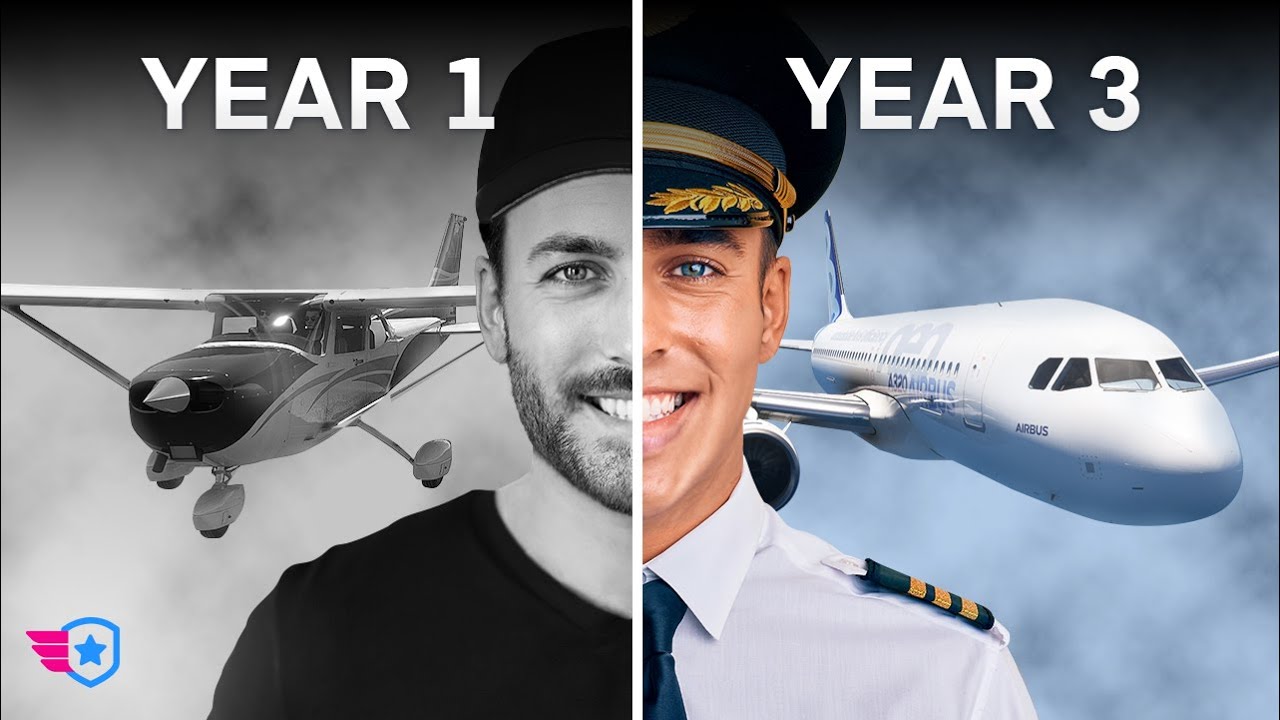
A direct, integrated path tends to suit students who want structure, speed, and a clear framework. The advantages usually include continuity, alignment of training phases, and a stronger sense of momentum toward airline entry. The risks are equally real. The financial commitment arrives earlier and in larger form. The schedule can be intense. Students who need more flexibility may find an integrated rhythm unforgiving.
A modular route can spread cost and offer more breathing room, but it can also lengthen the timeline and create fragmentation. Momentum matters in pilot training. Gaps between phases can be expensive in ways that are not visible on an invoice. Skills fade. Confidence wobbles. Theory recedes. The job market shifts.
For the kind of student AELO appears to target, someone who wants a structured bridge from initial training to airline opportunity, the integrated concept has obvious logic. The inclusion of an airline-linked MPL option strengthens that logic further. A school does not need to be everything to everyone. In fact, it is often more convincing when it clearly is not.
What stands out in AELO’s positioning
Set aside marketing language for a moment, and a few practical points remain particularly important.
- It is an EASA Approved Training Organization, CH.ATO.0311.
- It states a long operating history in Switzerland since 1985.
- It offers both an 18-month ATPL Integrated route and a SkyAlps Airlines MPL pathway.
- Its integrated package bundles flight training, theory, exam fees, APS MCC, PBN, and UPRT into one published price.
- It frames the end point not just as licensing, but as airline employment.
That combination gives the school a fairly distinct profile. Some training organizations emphasize low entry price. Others emphasize prestige. Others focus on niche training areas. AELO’s message is more straightforward: start in Gordola, train through a structured Swiss academy, and move toward airline hiring through an airline-oriented curriculum.
There is a practical honesty in that framing. It does not require romantic language about the skies or exaggerated storytelling. The route itself is the story. A student begins at a Swiss aerodrome, works through theory and flying, progresses into advanced preparation, and aims for an airline cockpit. That is not glamorous on most days. It is procedural, demanding, and expensive. It is also exactly what many aspiring airline pilots are looking for.
From place to profession
The phrase “from Gordola to the airlines” resonates because it captures the central challenge of pilot training, turning a place of learning into a launching point for a profession. AELO Swiss Academy’s published facts support that narrative with unusual clarity. A defined base in Gordola. A Swiss training identity dating back to 1985. EASA approval. An 18-month integrated program with specified hours and advanced components. A satellite base in Agno. A fleet of 27 aircraft. A headline price that aims to be comprehensive rather than partial. Graduate employment claims that point directly toward airline outcomes. And an MPL pathway tied to SkyAlps with guaranteed placement language.
For a prospective student, none of those facts should replace careful personal due diligence. But taken together, they do describe a training journey with a clear internal logic. It starts on the ground, in a real airport environment, under a regulated training structure. It advances through the academic and operational demands that airline preparation requires. And it points deliberately toward one destination, not just a license in hand, but a seat in commercial aviation.
That is the journey AELO Swiss Academy is presenting. Not a vague dream, not a hobbyist detour, but a professional route that begins in Gordola and is built to end at the airlines.